
Tmall
Where many go first for authentic brands—lots of flagship stores, stronger quality feel. Alibaba’s B2C brand marketplace focused on genuine goods across categories.
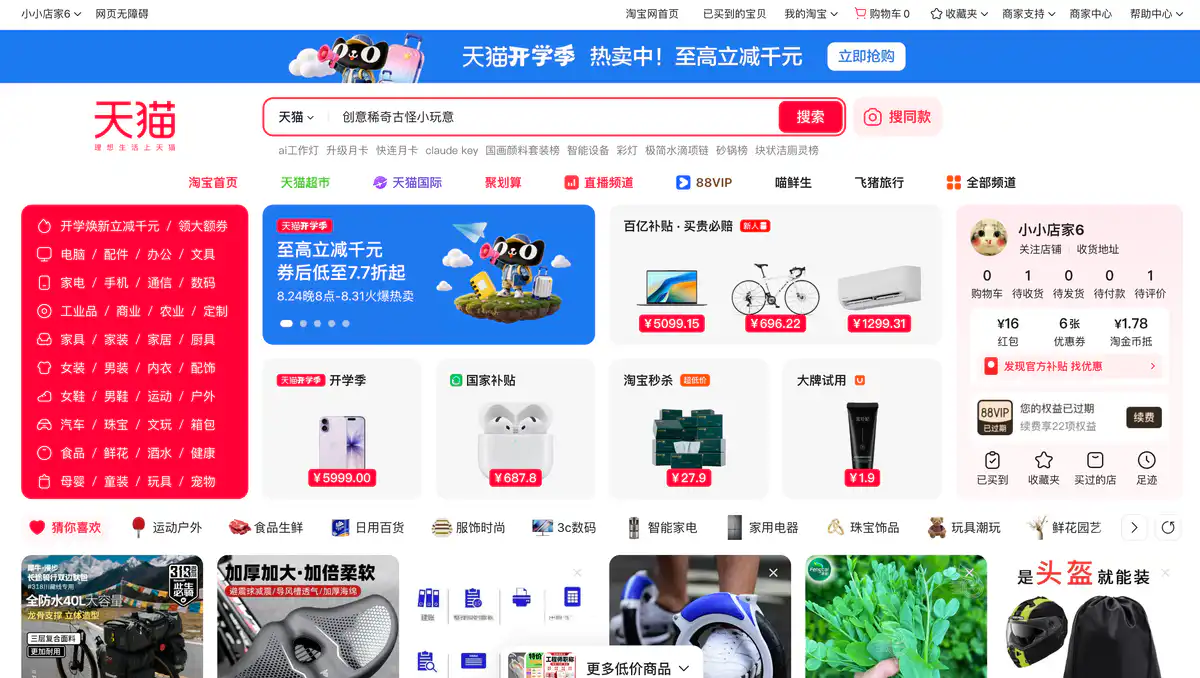
Site Overview
Tmall is Alibaba's branded authentic-goods mall.
Most stores are operated by enterprises with brand authorization, mainly flagship stores, exclusive stores, and franchise stores. When buying big brands, standardized products, or waiting for Double 11 / 618, many people check Tmall first.
Core Features
1. Branded B2C authentic-goods shopping
Full categories including apparel, beauty, electronics, home appliances, home goods, and more.
Merchant entry requirements are higher than ordinary marketplace stores, leaning toward official flagship stores / brand stores.
2. Major sales and membership benefits
Double 11, 618, and other major promotions are the core battlegrounds, with cross-store discounts and consumption coupons commonly available.
Membership often includes shopping discounts, shipping/after-sales benefits, joint memberships, and other combinations.
3. After-sales and quality commitments
The official website promotes services including quality assurance and 7-day no-reason returns.
For counterfeit goods or descriptions that do not match, platform rules and store deposits provide constraints.
4. Integrated with the Taobao ecosystem
The website can be browsed, but complete shopping is mostly done in the mobile Taobao / Tmall app.
Payment, logistics, and customer service are all part of the Alibaba system.
Pricing Model
For ordinary buyers: no “platform subscription fee” for browsing and ordering
- What you pay is the product price and shipping fee.
- 88VIP and similar are optional paid memberships, and prices and card types may change.
For merchants: opening a Tmall store has requirements and operating costs
- Requires enterprise qualifications + trademark/authorization, with store types including flagship stores, exclusive stores, franchise stores, and more.
- Common costs include a deposit, or policy-allowed alternatives such as performance insurance, as well as software service fees/commissions and advertising.
Please refer to official sources for fees and entry requirements:
Merchant recruitment: https://zhaoshang.tmall.com/
Comparison with Similar Platforms
Unique Advantages
- Strong perception of brand authenticity, with concentrated resources for major brand launches and flagship stores.
- Strong promotional burst power, with mature cross-store promotional mechanics, convenient price comparison for standardized goods and order bundling.
- Connected with Taobao, Alipay, and logistics systems, making the after-sales path relatively standardized.
Practical Highlights
- Searching a brand name often leads directly to its flagship or official store.
- Service labels such as shipping insurance and 7-day no-reason returns are clearly displayed before ordering.
Objective Limitations
- Everyday prices for the same item are sometimes higher than low-price platforms like Pinduoduo; not comparing prices may cost more.
- “Flagship store” does not always mean directly operated by the brand. You still need to distinguish between official flagship and authorized operation. For expensive items, it is advisable to check the store entity and reviews. The web experience is often weaker than the app.
| Comparison Item | Tmall | Taobao | JD.com | Pinduoduo |
|---|---|---|---|---|
| Positioning | Branded B2C authentic mall | Marketplace with more diverse small/medium merchants | Self-operated + platform, strong logistics | Affordable, group-buying oriented |
| Entry Barrier | High, mainly enterprise/brand | Low, individuals also allowed | Medium-high | Relatively flexible |
| Authenticity Expectation | Higher | More uneven | Very high for self-operated | Depends on store and channel |
| Suitable For | Buying brands and seeking protection | Comparing shops, long-tail items | Urgent digital/electrical purchases | Price-sensitive daily needs |
FAQ
Q1: Are Tmall and Taobao the same thing?
A: Both are part of the Alibaba ecosystem, but with different positioning. Tmall leans toward branded malls; Taobao leans toward marketplaces and small/medium merchants. Many entry points in mobile Taobao can also access Tmall stores.
Q2: Is Tmall always more expensive than other platforms?
A: Daily listed prices are sometimes higher. After stacking coupons during major promotions, some big brands may actually be more cost-effective. The key is the final price, not just the tag price.
Q3: Can everything be returned under the 7-day no-reason policy?
A: Most items support it, except categories excluded by law. Refer to the “Services” description on the product page.
Q4: Is 88VIP worth it?
A: It depends on how much you spend on Tmall/Taobao each year and whether you can use the discounts and joint benefits. Eligibility is often related to Taobao points and other factors; check the app for details.
Q5: How do I distinguish an official flagship store from a regular flagship store?
A: Look at the store name, official label, and operating entity together. Brand-direct operation and authorized distributors are not the same thing. For expensive purchases, do not rely on the word “flagship” alone.
Q6: How do I open a Tmall store?
A: Use the Tmall merchant recruitment channel, submit qualifications, pass review, and pay the basic fees before going live. The individual store route typically does not work on Tmall.
Q7: Who do I contact for after-sales disputes?
A: Contact the store's customer service first. If that does not work, use the platform's after-sales/complaint process. Keep orders, chat records, and evidence. The path in the app is usually more complete than on the web.