
Quora
When search engines fall short, you'll often find firsthand answers here. A global Q&A community for asking, answering, and debating across tech, life, work, and more—with some creator content behind Quora+.
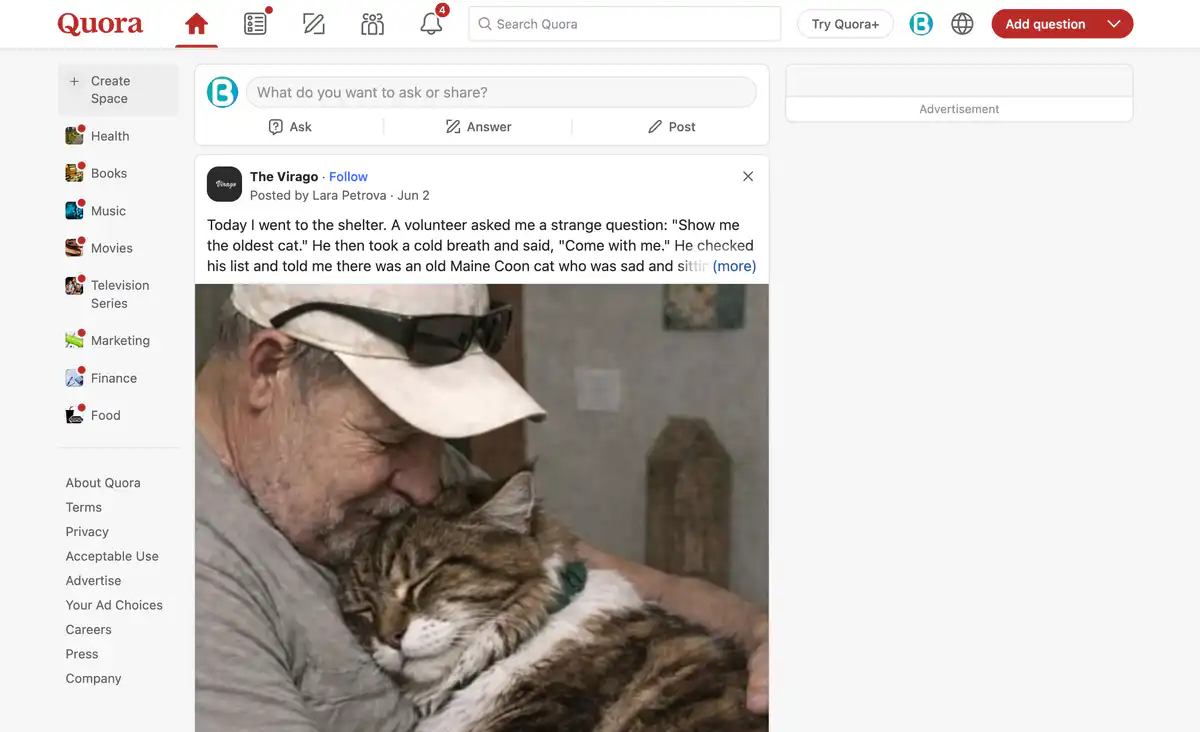
Site Introduction
One of the world's largest Q&A communities, launched in 2009, with the slogan "Share and grow the world's knowledge."
Post a question and someone may answer—doctors, programmers, entrepreneurs, and international students can all reply.
Core Features
1. Questions and Answers
You can ask almost anything: career, studying abroad, programming, health, relationships... Answers can include images and links. The more upvotes, the higher the ranking, and poor answers get downvoted.
2. Personalized Feed
Follow topics and writers, and the homepage will show content you're interested in. The algorithm continuously adjusts based on your reading and voting behavior, becoming more accurate over time.
3. Spaces Communities
Similar to topic-based groups, such as "Machine Learning" or "Silicon Valley Startups." You can post, discuss, and collaboratively curate content, making it more suitable than individual Q&A for following a field long-term.
4. Quora+ and Creator Monetization
Quora+ is the platform's subscription service: paying users get an ad-free experience and access to exclusive content from participating creators. Creators earn a share of Quora+ revenue, calculated based on subscribers' reading time and engagement with their content.
Pricing Model
Regular users: free.
After registration, asking, answering, browsing, and following are all free, but pages will have ads.
Quora+ subscription (official pricing):
| Plan | Price |
|---|---|
| Monthly | $6.99/month |
| Annual | $47.88/year |
| New users | 30-day free trial |
Subscription benefits: ad-free browsing + exclusive content from participating creators + a portion of the subscription fee goes directly to creators.
Enterprise advertising: Quora Ads targets business customers with bidding based on impressions/clicks, with no public unified pricing.
Pricing may change; please refer to the website: https://www.quora.com/quoraplus
Comparison with Similar Platforms
Unique Advantages
- The Q&A format is naturally search-friendly — long-tail questions (like "Is majoring in XX worth it" or "How to choose between XX and YY") have accumulated a large amount of real experience on Quora
- Answer quality is community-moderated — upvotes/downvotes + algorithmic ranking mean high-quality long-form answers can gain traffic over the long term
- Broad cross-domain coverage — from quantum physics to rental pitfalls, one account can browse it all
Practical Highlights
- Answers can be very long and detailed, suitable for in-depth experience sharing, unlike Twitter where you can only post short messages
- Spaces let you follow a topic vertically without having to sift through the homepage
Objective Limitations
- Relatively many ads — the free user experience is average; to avoid ads you need to buy Quora+
- Creator monetization channels have narrowed — Partner Program and Space subscriptions have been discontinued; the main channel now is Quora+ revenue sharing, and the threshold is not low
- Some answers vary in quality — marketing content and AI-generated responses are mixed in, so you need to judge for yourself
Comparison with Similar Tools
| Comparison Item | Quora | Stack Overflow | |
|---|---|---|---|
| Positioning | Q&A + knowledge sharing | Interest communities + discussion threads | Programming Q&A |
| Free or not | Basic features free | Basic features free | Basic features free |
| Content format | Mainly Q&A, with Spaces | Posts, comments, voting | Technical Q&A + voting |
| Content tone | Experience sharing, life advice | Memes, trending topics, varies by sub | Strictly technical, strict rules |
| Search friendliness | High, often indexed by Google | Medium | Extremely high for technical questions |
| Paid options | Quora+ ($6.99/month) | Reddit Premium | No personal subscription (Teams for business) |
| Main weakness | Many ads, monetization policies keep changing | High noise, not friendly to new users | Not suitable for non-technical topics |
Frequently Asked Questions
Q1: Do I need to pay to use Quora?
No. Registration is free, and asking and answering are free. You only need to subscribe if you want to remove ads or read Quora+ exclusive content: $6.99/month or $47.88/year.
Q2: What is the difference between Quora and Zhihu?
Both are Q&A communities, but Quora is primarily English-language content, with more international users and topics; Zhihu's Chinese-language ecosystem is more mature. For questions about studying abroad, foreign companies, or overseas life, Quora is often more relevant.
Q3: Can I earn money by writing answers?
The previous Partner Program for earning by asking questions was discontinued long ago. Space independent subscriptions and ad revenue sharing were also shut down in November 2024. Creators now mainly rely on Quora+ revenue sharing, which requires an invitation, and payment is based on subscribers' reading time of your content.
Q4: Is Quora+ worth buying?
If you browse Quora daily and hate ads, or frequently read exclusive content from certain creators, $6.99/month is reasonable. If you only search for an occasional question, the free version is sufficient.
Q5: What is the relationship between Poe and Quora?
Poe is an AI chat product made by Quora's company, allowing you to switch between models like GPT, Claude, and Gemini in one interface. Accounts and billing are separate; Poe has its own subscription plans and is not the same as Quora+.
Q6: How do I quickly find reliable answers?
Look at upvote counts, the answerer's credential tags (like "Worked at Google for 10 years"), and whether the answer has specific details rather than empty talk. Compare multiple highly upvoted answers to the same question rather than just reading the first one.